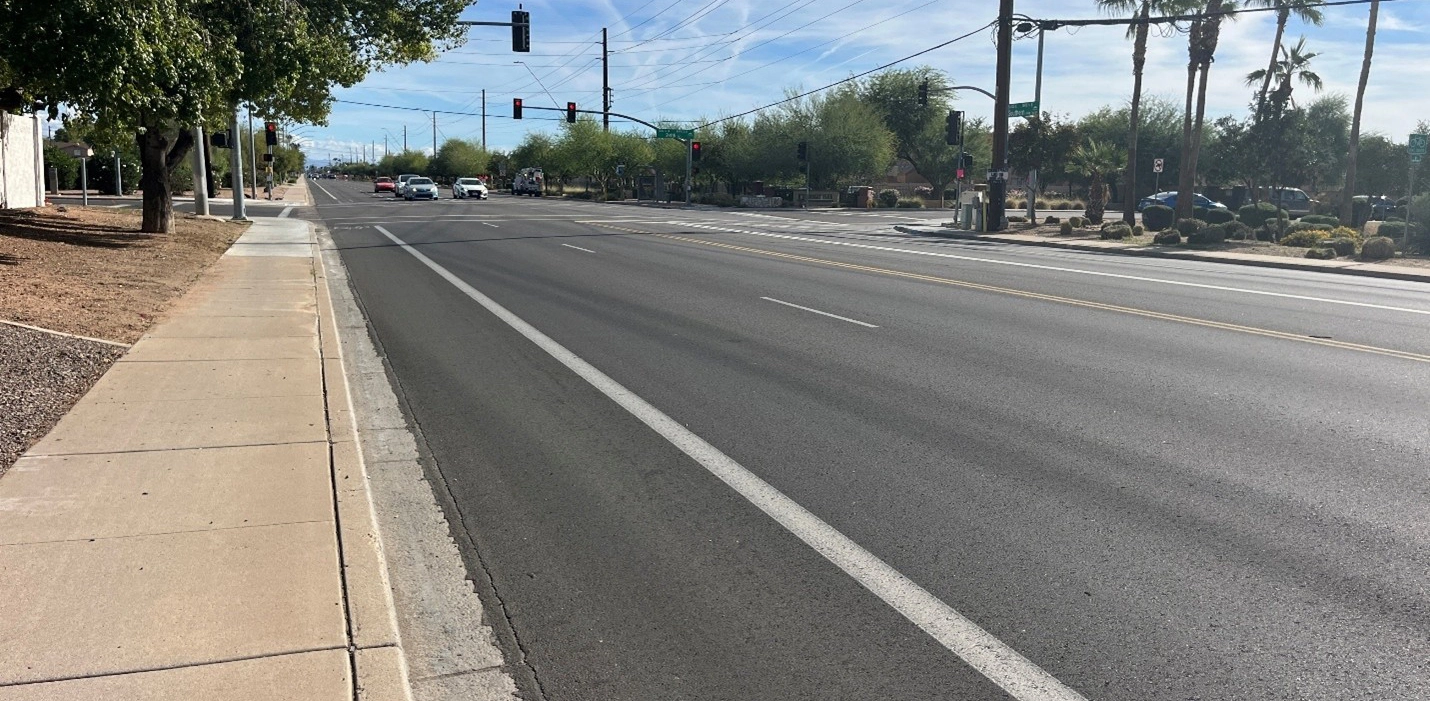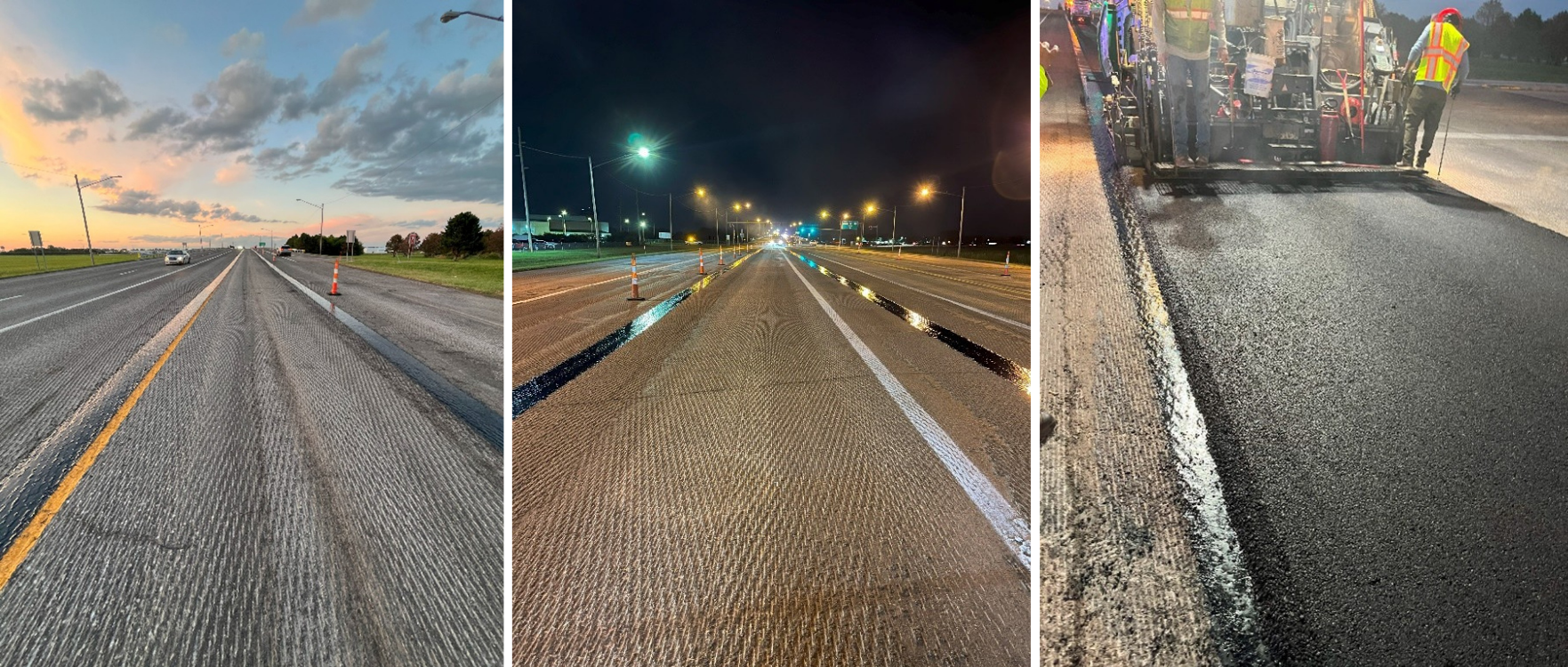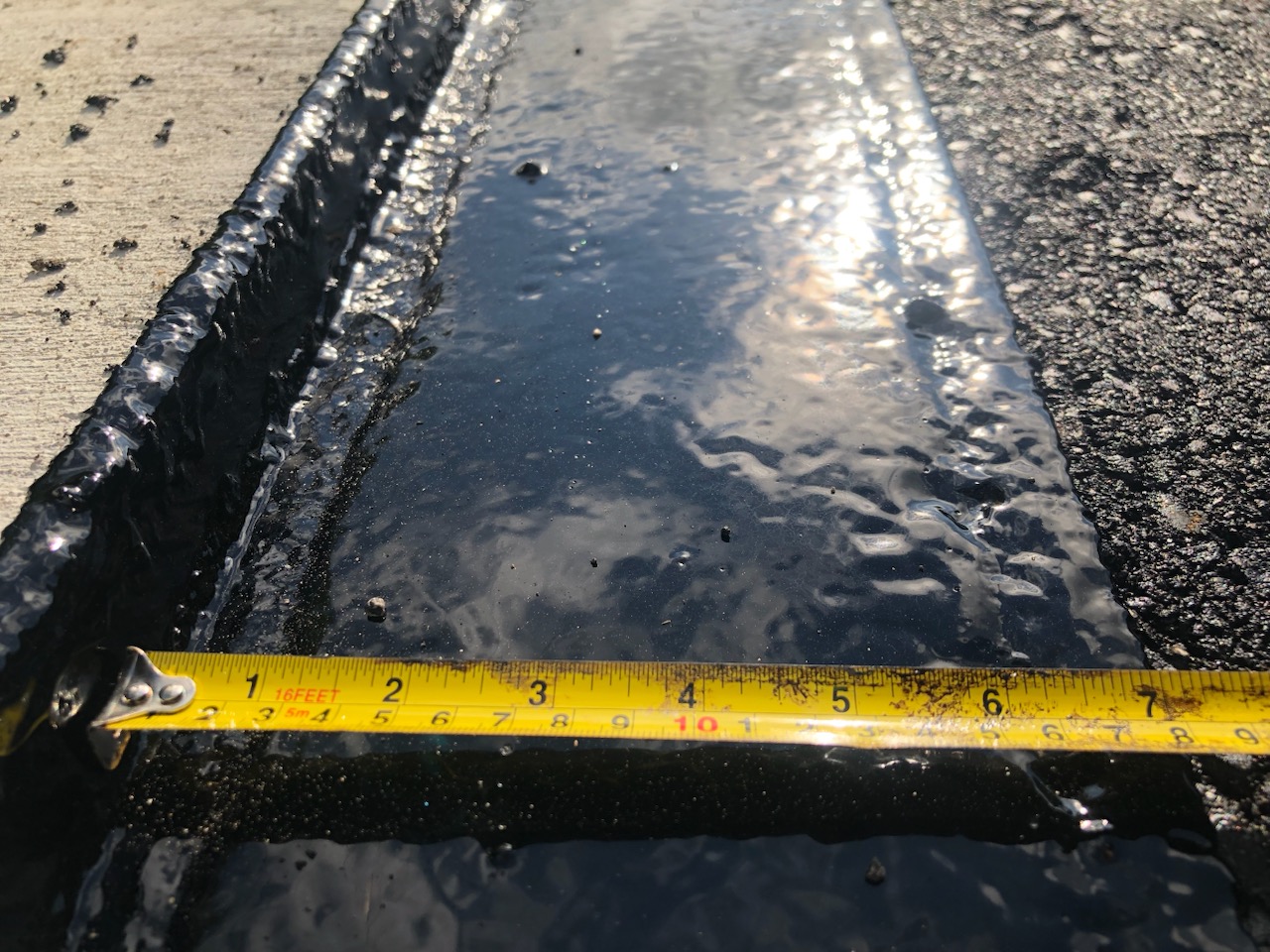
Washington, D.C. - 2023 Transportation Research Board Annual Meeting
The Transportation Research Board (TRB) Annual Meeting was held in Washington, D.C. earlier this year. This year’s theme was Rejuvenation Out of Disruption: Envisioning a Transportation System for a Dynamic Future. The meeting included exhibitors from academia, industry, and government agencies presenting the latest research findings, technical developments, and implementation efforts within the asphalt industry.
Asphalt Materials and HRG Labs had the unique opportunity to present two different posters at this year’s Transportation Research Board (TRB) Annual Meeting in early January.
“Impact of Rumble Strips on Longitudinal Joint Pavement Performance”
"Comparative Life Cycle Assessment of a Void Reducing Asphalt Membrane
and Other Longitudinal Joint Treatments"
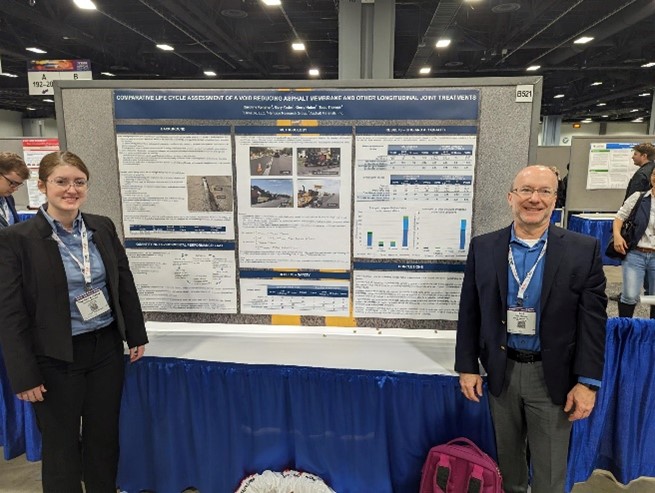
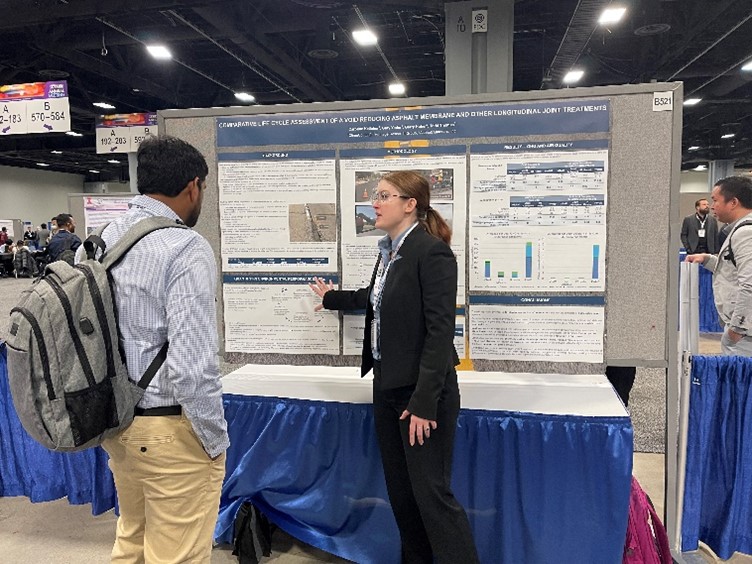
In 2021, ClimeCo collaborated with Asphalt Materials, Inc. (AMI) to complete an LCA-based sustainability assessment of J-Band®, AMI’s void reducing asphalt membrane (VRAM) product. Together, ClimeCo and AMI wrote and presented their paper and poster titled, "Comparative Life Cycle Assessment of a Void Reducing Asphalt Membrane and Other Longitudinal Joint Treatments" at this year’s TRB Annual Meeting.
Caroline Kelleher and Gary Yoder from ClimeCo, Gerry Huber of HRG, and Todd Thomas from AMI are the paper’s authors. During the meeting, many attendees came by to learn more about the three sustainability attributes of J-Band: environmental, economic, and social (safety).
Important conclusions of this paper include the following:
- There is significant potential to develop transportation infrastructure in line with the principles of sustainable development
- Sustainability is an increasingly important component of transportation infrastructure, with federal, regional, and state entities having a range of awareness and education programs, all while promoting the use of 'green' or sustainable roadway products.
- Upstream emissions associated with materials production are outside the carbon accounting of direct emissions, i.e., scope three instead of scope one emissions, and thus, as agencies and contractors look to reduce their scope one emissions, they will be evaluating methods and materials which will allow for a reduction in fuel usage.
- Longitudinal joint solutions that offer the lowest application-phase emissions, reduced maintenance needs, and extended road lifetimes, will result in the lowest scope one emissions. In this analysis, VRAM and joint adhesive have the lowest construction phase emissions.
- VRAM had the most economical life cycle cost performance compared to conventional joints and maintenance.
To read this paper, poster, other studies, and educational items about VRAM and J-Band, click the Resources link in the menu bar.
Sustainability is very important to Asphalt Materials, Heritage Construction + Materials, and The Heritage Group. There are three pillars of sustainability: Economic. Environmental. Social/Safety.
Understanding Sustainability, LCAs, Cradle-to-Grave . . . and More!
There are many sources that use 3 pillars to help explain sustainability. But explaining the three pillars of sustainability first requires defining sustainability. The concept of sustainability arose from environmental activism. It’s taken to mean making sure that the current generation can meet its needs without making it impossible for future generations to meet theirs. That is, we can sustain ourselves and posterity only with practices that do no future harm.1
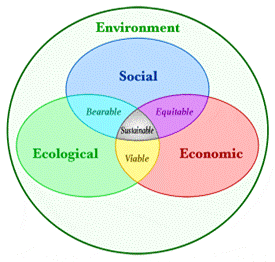
We often hear talk about social sustainability, economic sustainability, and environmental sustainability. If we think of sustainability as the roof of a building that protects its occupants, we see that it takes all three pillars to hold it up. Sometimes people summarize them with the words people, profit, and planet. Weakness in any one pillar puts the roof in danger of collapsing. 1
Although the phrase “three pillars of sustainability” is common, one of the most helpful descriptions explains how they relate to each other via a Venn diagram. It comes closer to the related term “three spheres of sustainability.” In either case, no one of them can function optimally without both of the others as shown below.1
A Life Cycle Assessment
A Life Cycle Assessment (LCA), offers a framework for quantifying the potential environmental impacts of a product from cradle–to–grave (i.e., from growth/extraction of raw material inputs all the way through a product’s disposal), allowing us to make that determination. One of the many applications of an LCA is its ability to demonstrate the environmental benefits achieved by adopting different operational practices.

In February 2022, Gary Yoder and Jaskaran Sidhu wrote a story titled ‘What is a Life Cycle Assessment?’ This informative article highlights important information such as:
- A Product’s Competitive Edge: Performance and Cost
- Benefits of Product vs. Alternatives
- Quantified GHGs and criteria air pollutants (AQ)
- Using LCAs for a More Sustainable Future
To read the entire article, follow the link below:
https://climeco.com/what-is-a-life-cycle-analysis/
Editor’s Note: VRAM, Void Reducing Asphalt Membrane is referred to in Illinois as LJS, Longitudinal Joint Sealant.
J-Band® is a VRAM product of Asphalt Materials, Inc. and was created in the labs of The Heritage Research Group. AMIGUARD™ is a rapid penetrating emulsion product of Asphalt Materials, Inc. and was created in the labs of The Heritage Research Group.
J-Band®, CCAP® and T-Bond® are registered trademarks of Asphalt Materials, Inc. AMIBIND™, AMIBOND™, AMICYCLE™, AMIGUARD™, AMISEAL™ are trademarks of Asphalt Materials, Inc.
To learn more about Asphalt Materials, Inc., visit the website, About Us - Asphalt Materials, Inc. (asphalt-materials.com)
Sources: