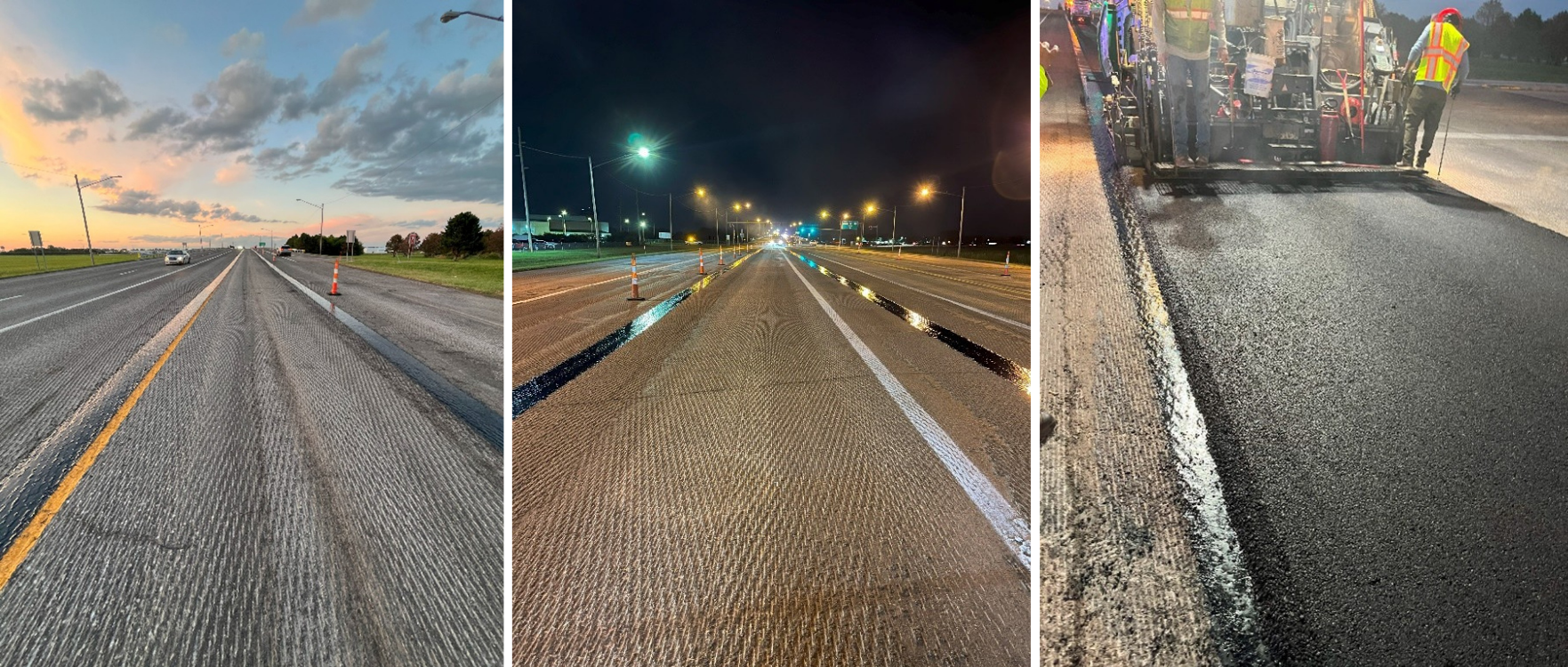
Getting a good bond between hot mix asphalt (HMA) and concrete curbs is challenging but critical for long-lasting pavement. To combat this issue, many agencies are turning to Void Reducing Asphalt Membrane (VRAM) to reinforce these vulnerable edges.
J-Band® VRAM does more than just seal the asphalt to the concrete curb. This unique asphalt technology reduces pavement permeability at the mat's edge, protecting it from air and water intrusion—the leading causes of cracking and premature failure.
Why Westerville Chose VRAM
The City of Westerville, a Columbus suburb, recently applied VRAM to protect longitudinal joints at the centerline and along concrete curbs.
Why the curb focus? Water often pools along curbs, and these areas are notoriously hard to compact and seal properly. The use of traditional tack coats during the paving process does not create a robust enough bond at the concrete-HMA joint. Differences in the properties of the two materials (stiffness, expansion coefficients, etc.), as well as high pavement permeability, lead to joint distress that is often sealed with a crack filler. J-Band VRAM provides a superior bond and fills air voids in the mat above, reducing permeability concerns. This dual purpose creates a stronger, more resilient joint.
Westerville is no stranger to VRAM. Since 2019, the city has used it in over 70 resurfacing projects, extending pavement life and freeing up budget for additional preventative treatments that further boost road longevity.
How the Project Worked
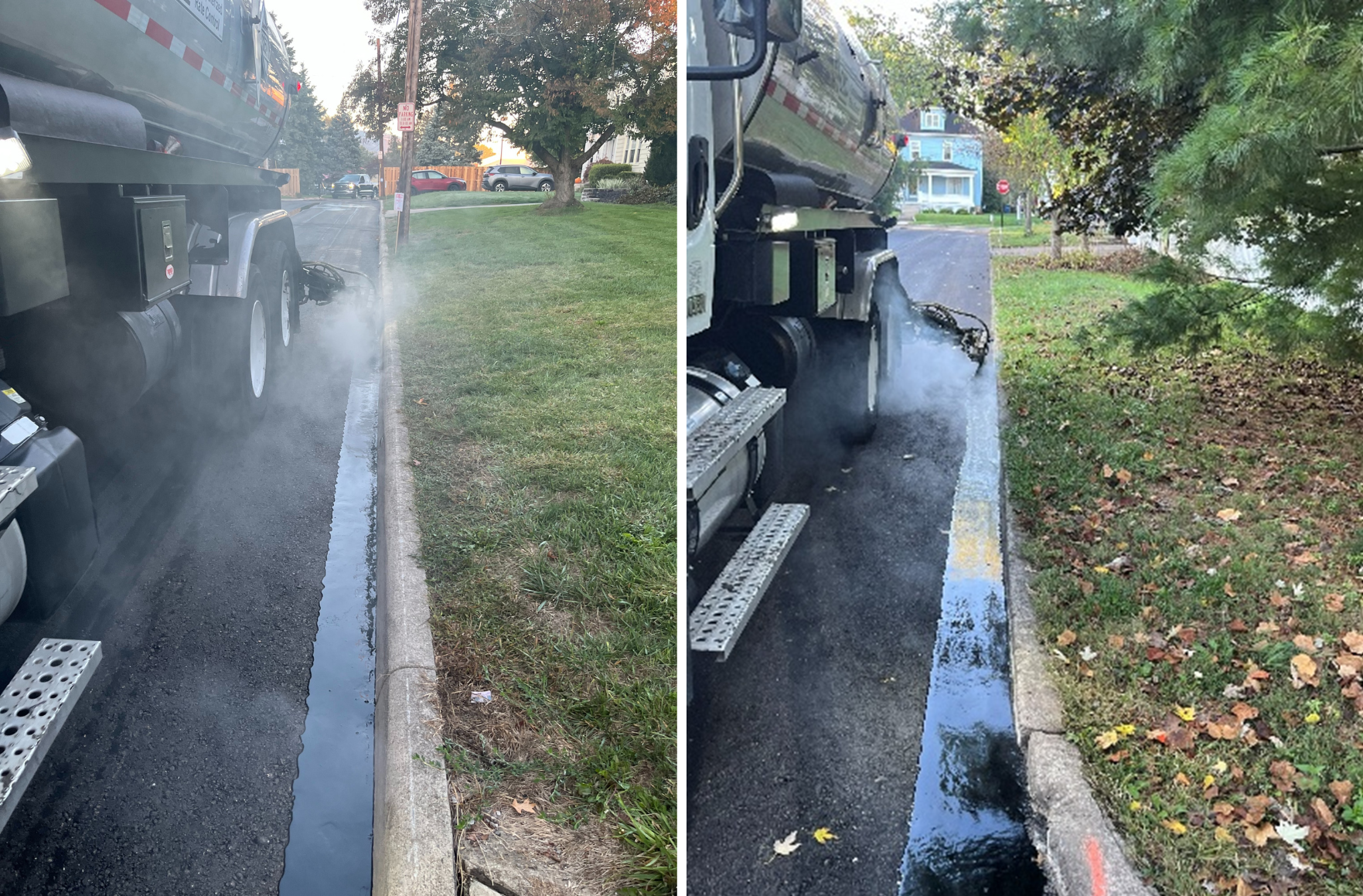
For this project, several suburban roads were resurfaced. Before Strawser paved the 1.5-inch HMA surface course, Specialized Construction, Inc. (SCI) sprayed VRAM in two key areas:
- A band at the future centerline joint
- A half-width band along the concrete curbs
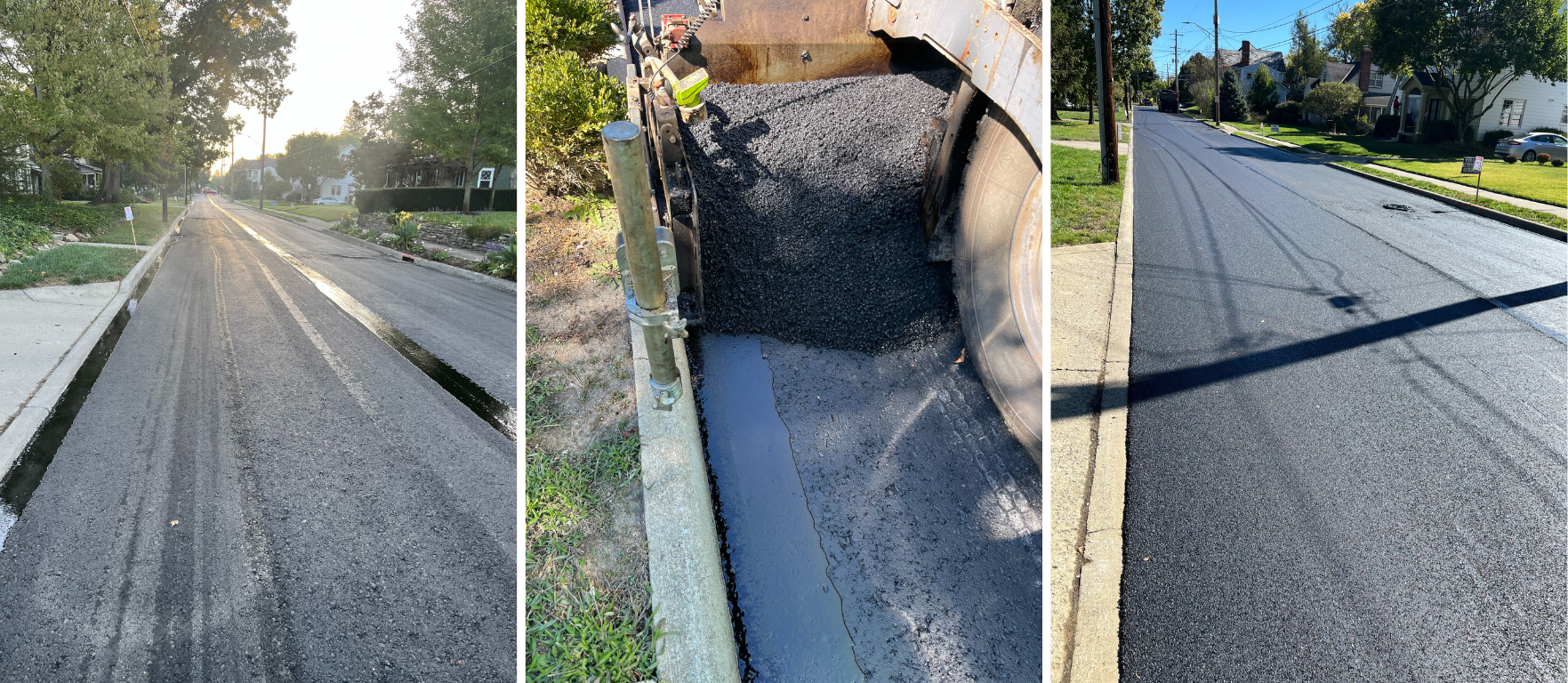
VRAM cools quickly (at the ambient temperature of 43°F, less than five minutes), so the material was left uncovered overnight without tracking or damage until paving the next morning. When hot asphalt was placed the next morning, the VRAM melted and migrated upward into interconnected pavement voids, aided by vibratory roller passes.
The Payoff
By addressing these trouble spots from the start, Westerville is reducing water infiltration at centerline and curb joints—meaning fewer cracks, potholes, and costly repairs down the road. It is a proactive approach that pays off in durability and savings.
Say goodbye to premature cracking. Say hello to longer-lasting pavements.
Want to learn more about J-Band® VRAM?
- Dive into the research: VRAM and Pavement Permeability
- See real-world results of VRAM-reinforced joints: OH-168
- Let’s Talk! Connect with our team for a personal consult: jbandinfo@thgrp.com