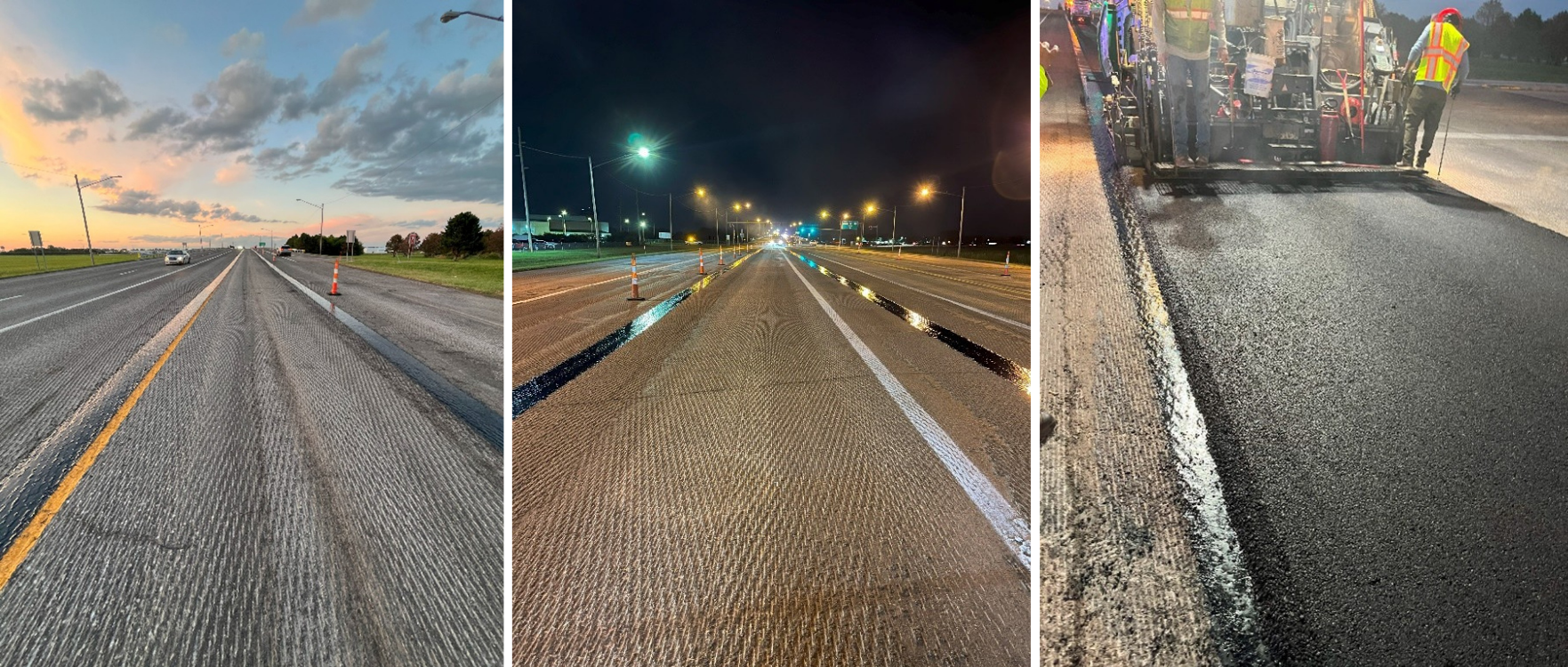
Road managers know that the longitudinal joint is the first part of the pavement to fail. As a road’s most permeable part, this joint is susceptible to the natural elements of the environment. Air and water work its way down through this gap, causing the joint to deteriorate, crack, and eventually pothole. When the longitudinal joint fails, the rest of the road soon follows—triggering the need for even more maintenance down the line.
On June 6th, Cuyahoga County Ohio saw crews working to improve Union Avenue from 116th Street to Kinsman Road. This two-lane road with multiple side streets underwent a repaving process which started by applying VRAM to the centerline. VRAM is a Void Reducing Asphalt Membrane (VRAM).
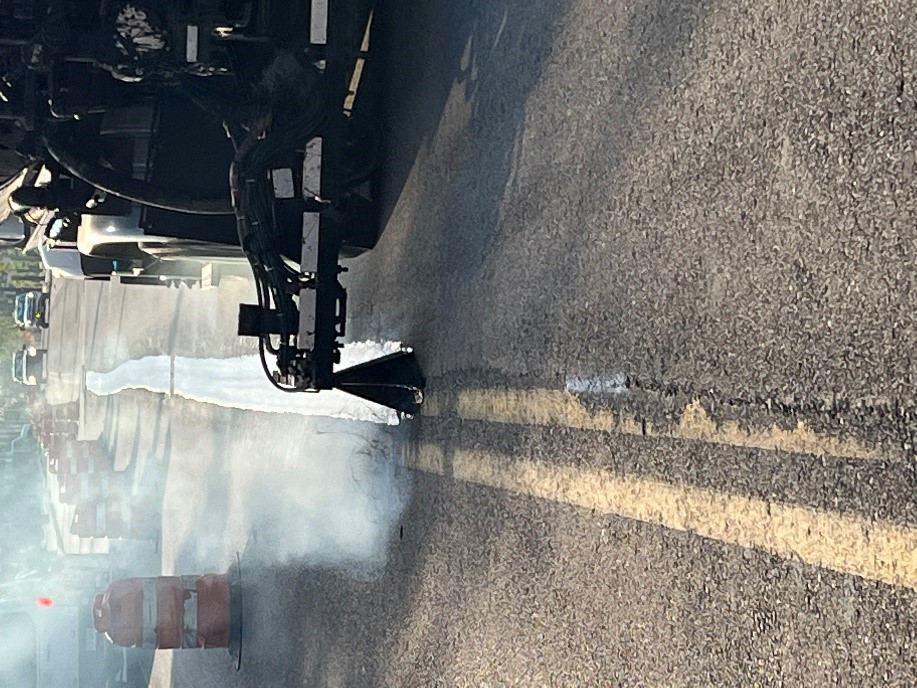
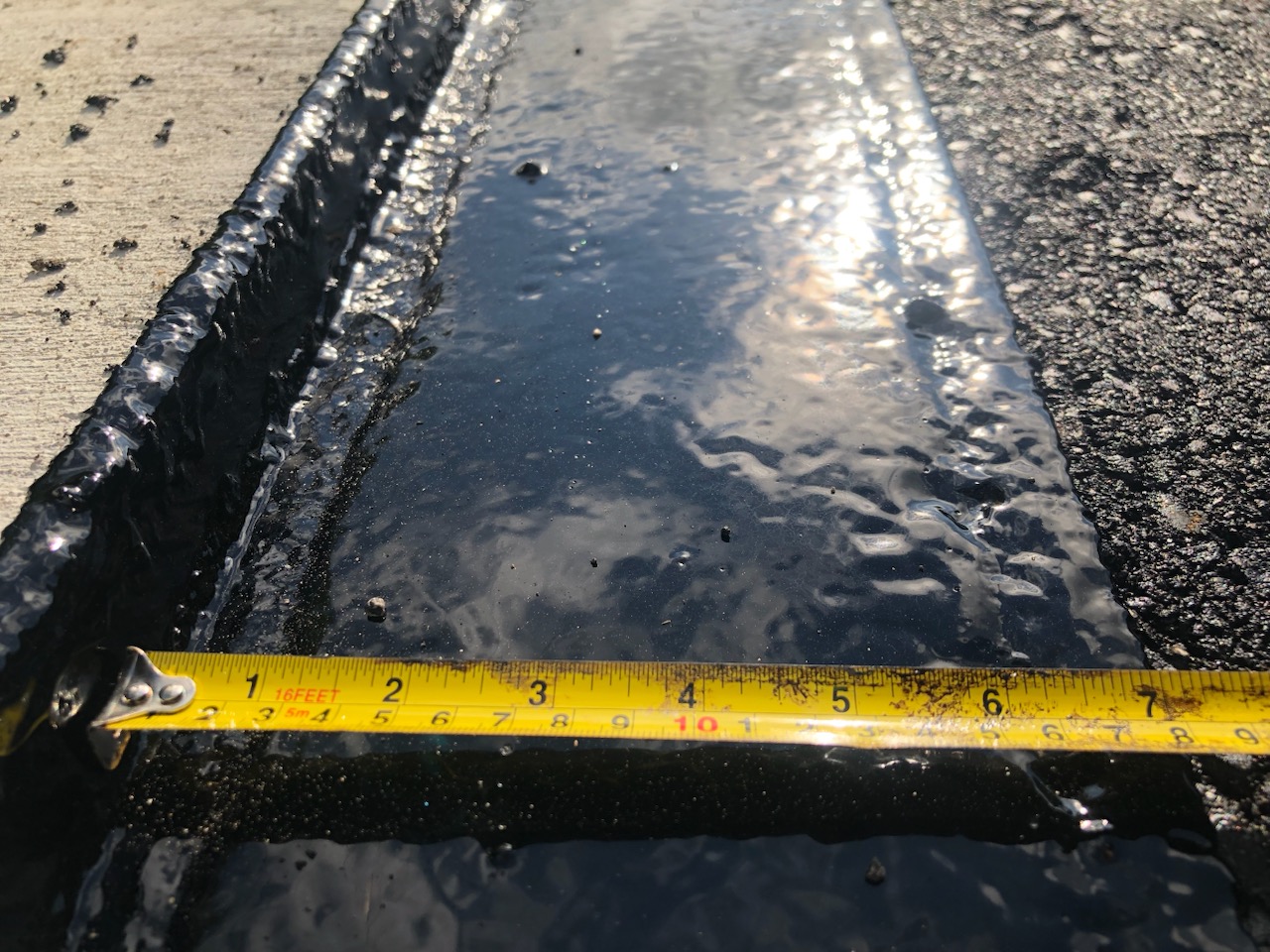
Unlike other mechanical treatments, J-Band® is a materials approach, a highly polymer-modified asphalt cement that is placed at the location of a longitudinal joint before paving. As HMA is paved over it, the VRAM melts and migrates up into the voids of the mix, making the mix impermeable to moisture while sealing the longitudinal joint itself.
The purpose of VRAM is to fill a portion of the voids with an asphalt product from the bottom up, hence why the pavement goes on top of the VRAM application.

Most projects are targeted to be 18" wide, however, this particular project had a targeted width of 15". This entire project from start to finish utilized 1,048 gallons (8,960 lbs.) of asphalt which was applied to over 9,295 feet.

J-Band has been setting a new standard as a proven approach that protects joints from premature failure. The county of Cuyahoga is utilizing J-Band, as they too were aware that J-Band is an investment for the roads to remain protected for longer periods of time. Over a 15 to 20-year period of time, the J-Band treated sections of a road will require a much lower frequency of maintenance than those areas not treated.
J-Band® is a VRAM product from Asphalt Materials, Inc. and was created in the labs of the Heritage Research Group. J-Band has been helping roads last longer since 2002 and is currently in 22 States and The District of Columbia.
You can view studies that other states have conducted that recommend VRAM as a solution to building longer-lasting, safer roads by clicking here: https://thejointsolution.com/resource/studies/
Editor’s Notes: VRAM, Void Reducing Asphalt Membrane is referred to in Illinois as LJS, Longitudinal Joint Sealant.
Depending on the situation VRAM can be sprayed at different widths. This article notes 15", but 18” is a more typical application width for centerline applications.