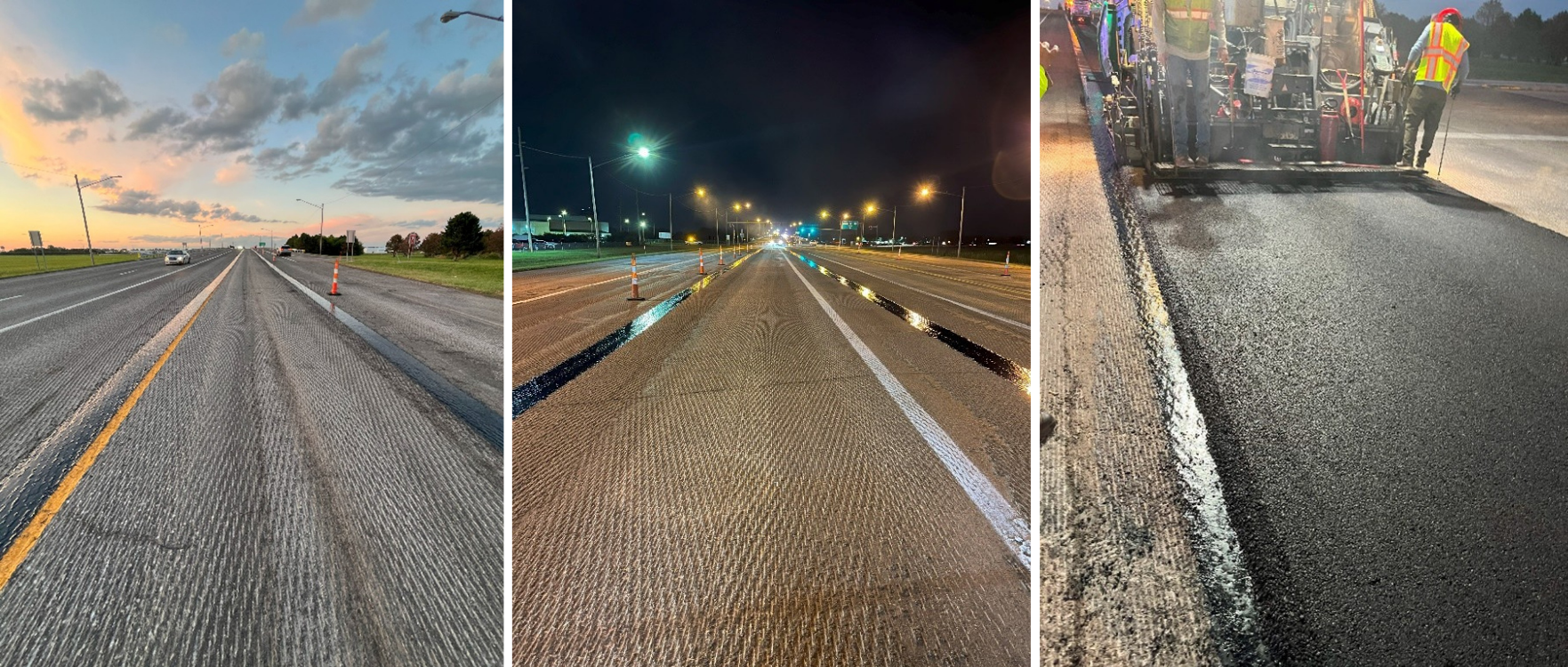
Every road manager knows that longitudinal joints are typically the first part of the pavement to fail, but why does this happen and how can it be stopped?
Longitudinal joints are the weakest point of the pavement because they have a higher concentration of air voids than the rest of the mat. Achieving density is often more difficult at the joint for this reason. Water seeps into these air voids, causing deterioration, cracking and potholes. When the joint fails, the rest of the pavement is quick to follow.
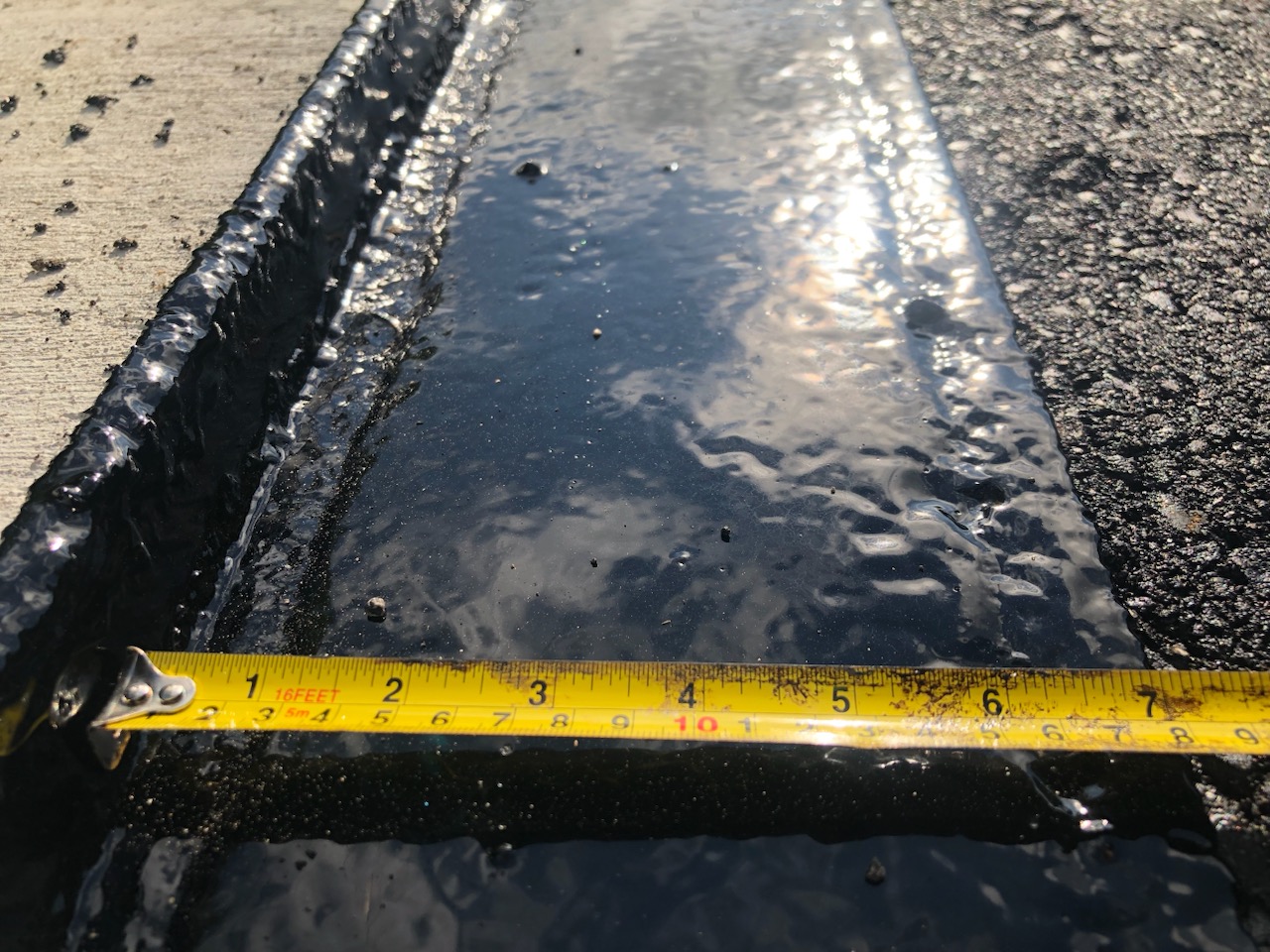
To account for this weakness, an asphalt technology, void reducing asphalt membrane (VRAM), was developed to dramatically reduce air voids at the joint, allowing for better density and compaction. J-Band, the premier VRAM, has proven its ability to extend the life of longitudinal joints. VRAM is also known as Longitudinal Joint Sealant (LJS) by the state of Illinois.
Our team regularly monitors the performance of roads treated with J-Band® and returned to this 2016 project to assess its condition.
Project Details
- Owner: Illinois Department of Transportation (IDOT)
- Prime Paving Contractor: United Contractors Midwest
- VRAM Applicator: Illiana (Evergreen Roadworks)
- Location: Interstate 72, Sangamon & Morgan Counties, IL
- Date Constructed: June 2016
- Date Reviewed: 8 years post-construction, September 9, 2024
Beginning near the town of New Berlin, IL, at MP 71.85, this project covers nine miles of I-72 westbound to MP 81.55. Field Support Manager Jim Cunningham, of Asphalt Materials Inc. (AMI), reviewed this project on a warm and sunny day in September 2024, eight years after its initial construction.
Project Observations
On I-72, VRAM was used to preserve the center lane-to-lane joints, which have held strong for over eight years. The minor surface openings that have occurred at the joints range from hairline to ½” wide for the length of the project. This is typical of a VRAM-reinforced joint.
Since construction, the project has required no maintenance or repair. Notably, the area adjacent to the joints showed no deterioration or cracking as would typically be seen in a conventionally constructed longitudinal joint of this age.
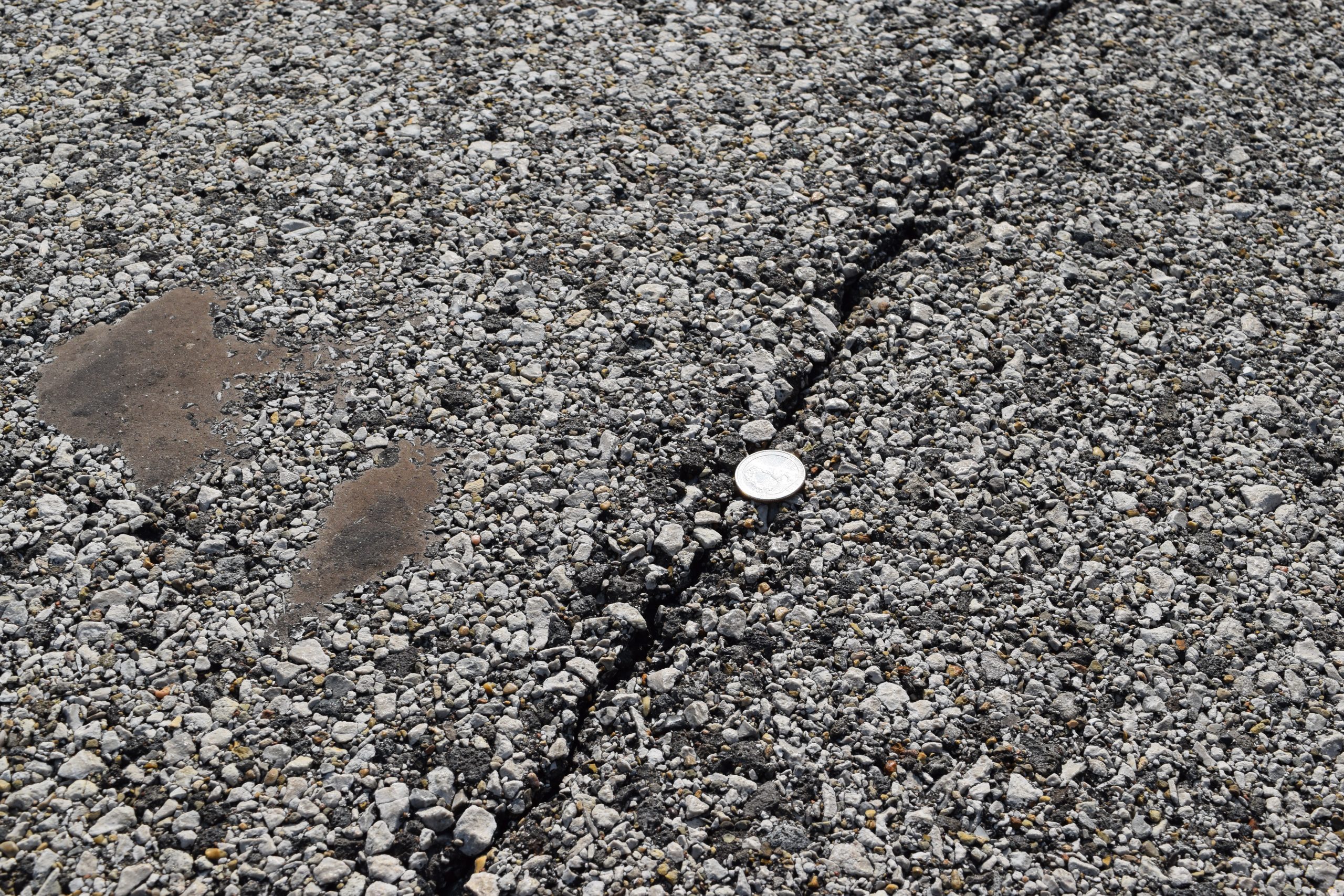
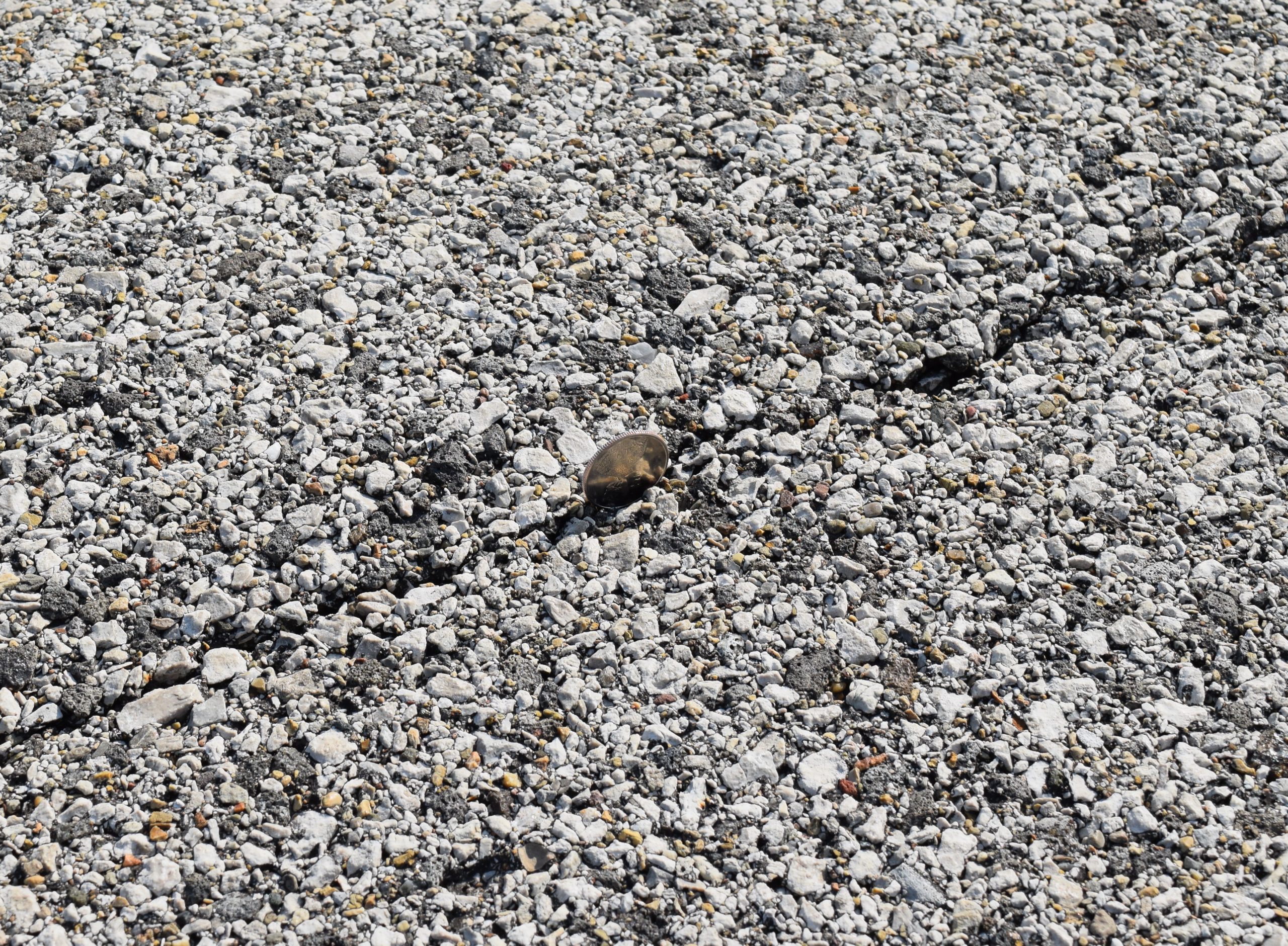
MP 75, hairline to ¼” opening _______________________ MP 78, some ½ openings
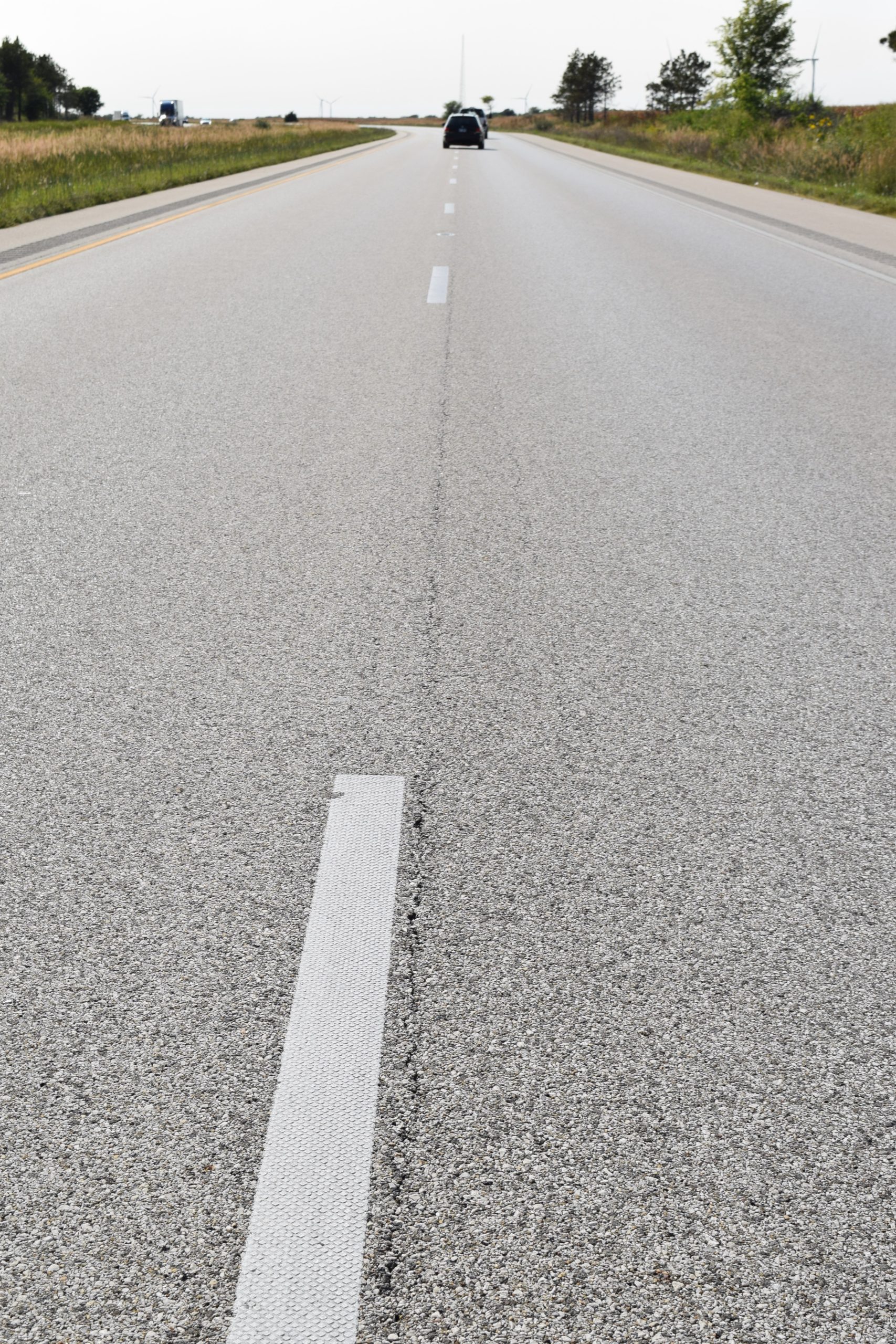
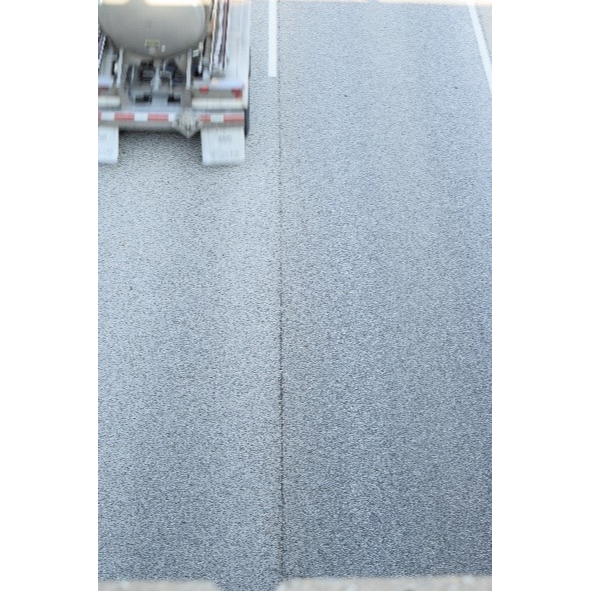

As expected for an 8-year-old J-Band centerline __________ View from the Overpass of State Highway 123
Over the last eight years, J-Band has continued to protect I-72’s longitudinal joint without the need for any further maintenance work on this section of the interstate. By investing in J-Band, IDOT will likely save at least $2 for every $1 they initially spent. Because of the success of projects such as this one, IDOT has adopted VRAM/LJS as a standard specification.
One IDOT Engineer said, “LJS [VRAM] changes the joint area from being the first thing to become a problem to the last.”
Curious about what an investment in J-Band could do for your road network? Check out our ROI calculator.
Editor’s Notes:
J-Band® is a registered trademark of Asphalt Materials, Inc. (AMI). J-Band® was created in the labs of the Heritage Research Group (HRG) and is a product of AMI.