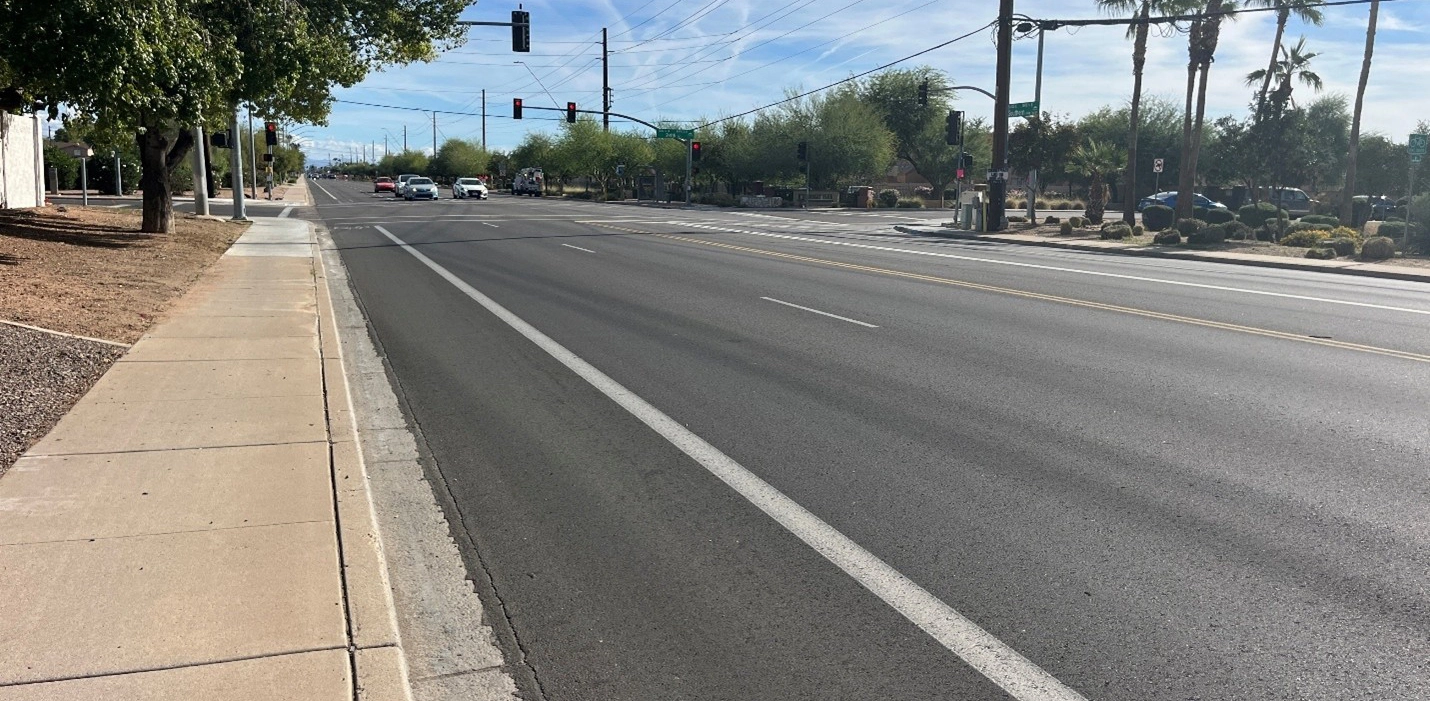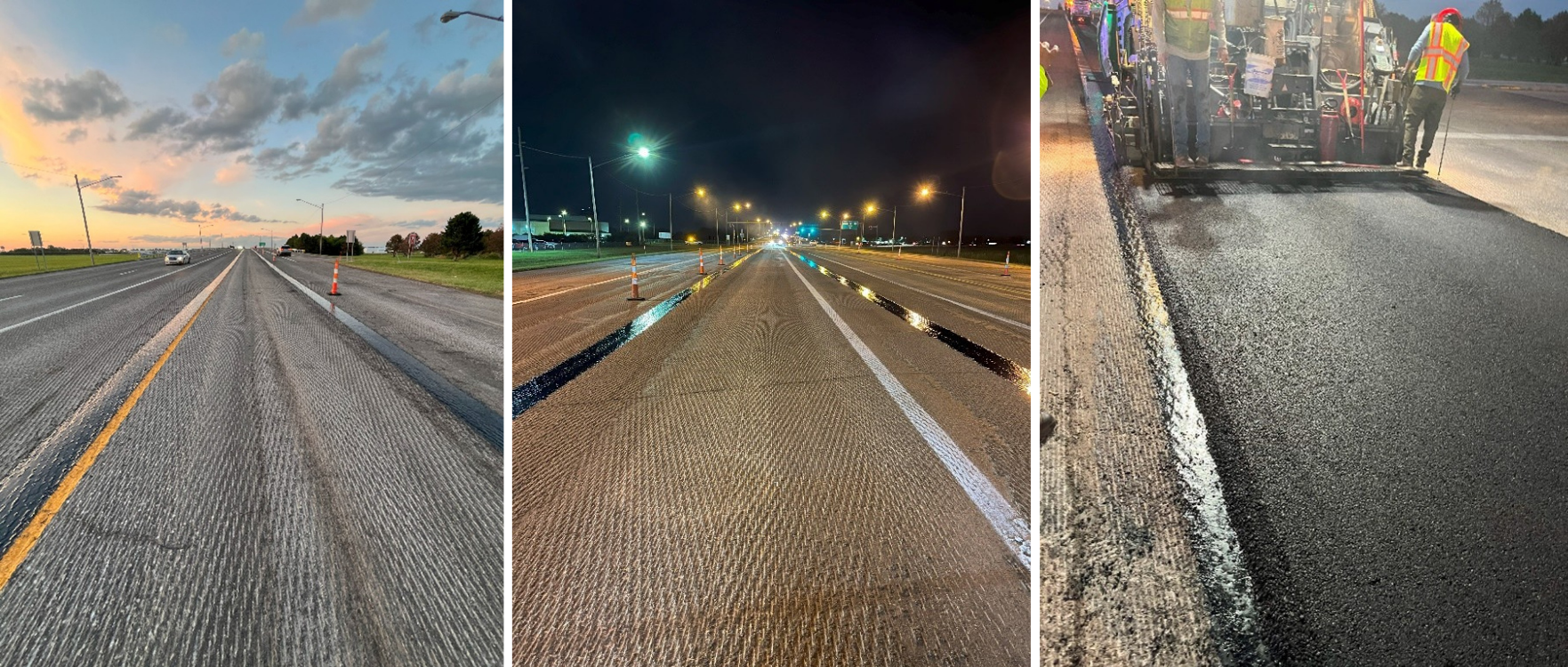
Crack sealing is an important practice for agencies to prevent further damage to already emerging cracks in a pavement structure. The longitudinal construction joint is commonly crack-sealed, because it is one of the most vulnerable spots in a road.
Despite crack sealing, the longitudinal joint is often the first location to succumb to water infiltration, resulting in large cracks and potholes. This means ongoing maintenance at joints, which can be burdensome to road managers and involves risk for teams working near live traffic.
The Solution to Joint Failure
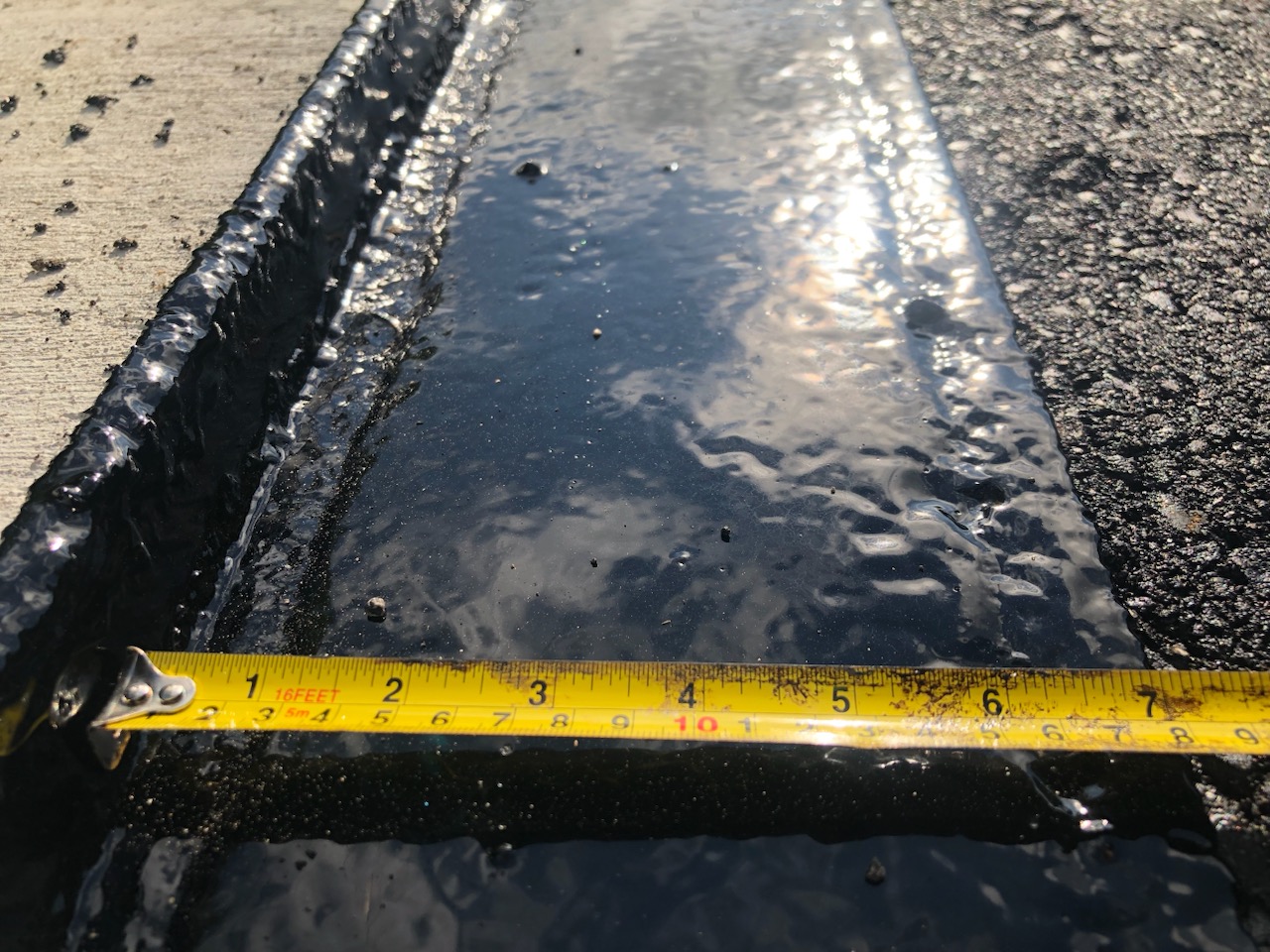
The age-old issue of longitudinal joint failure led innovators to develop a treatment that is applied just prior to paving. This product, a Void Reducing Asphalt Membrane (VRAM), fills air voids around longitudinal joints, creating a pavement structure that resists deterioration. J-band® is a VRAM, proven to extend longitudinal joint life, saving agencies time and money. The US-6 project demonstrates the results of specifying VRAM for your roads.
Project Details
- Owner: Ohio Department of Transportation (ODOT)
- Prime Paving Contractor: Specialized Construction, Inc. (SCI)
- Applicator: Gerken
- Location: US-6, Edgerton, Ohio in Williams County
- Date Constructed: 2018
- Date Reviewed: October 2024
When this section of US-6 was constructed in 2018, 2.2 miles of the 10.79-mile project were paved over a standard 18” band of VRAM at the center longitudinal joint.
The J-Band team regularly monitors the performance of VRAM projects like this. In 2023 and 2024, Field Support Manager Chad Crosby reviewed both the VRAM test section and the control sections of US-6, revealing the following.
Project Observations
7 years after construction, the VRAM section of this project has outperformed the control sections. Above the control longitudinal joint, 1/2” – 1” cracks have emerged throughout 100% of the 8.59-mile control joint. In comparison, the VRAM joint has some expected 1/8”-1/4” cracking.
Notably, the condition of the control section prompted ODOT to crack seal the majority of the project in 2020. The VRAM section in the middle of the two control sections was also crack seal although the condition of the VRAM section did not warrant this treatment.
Control Section Joint (No VRAM)
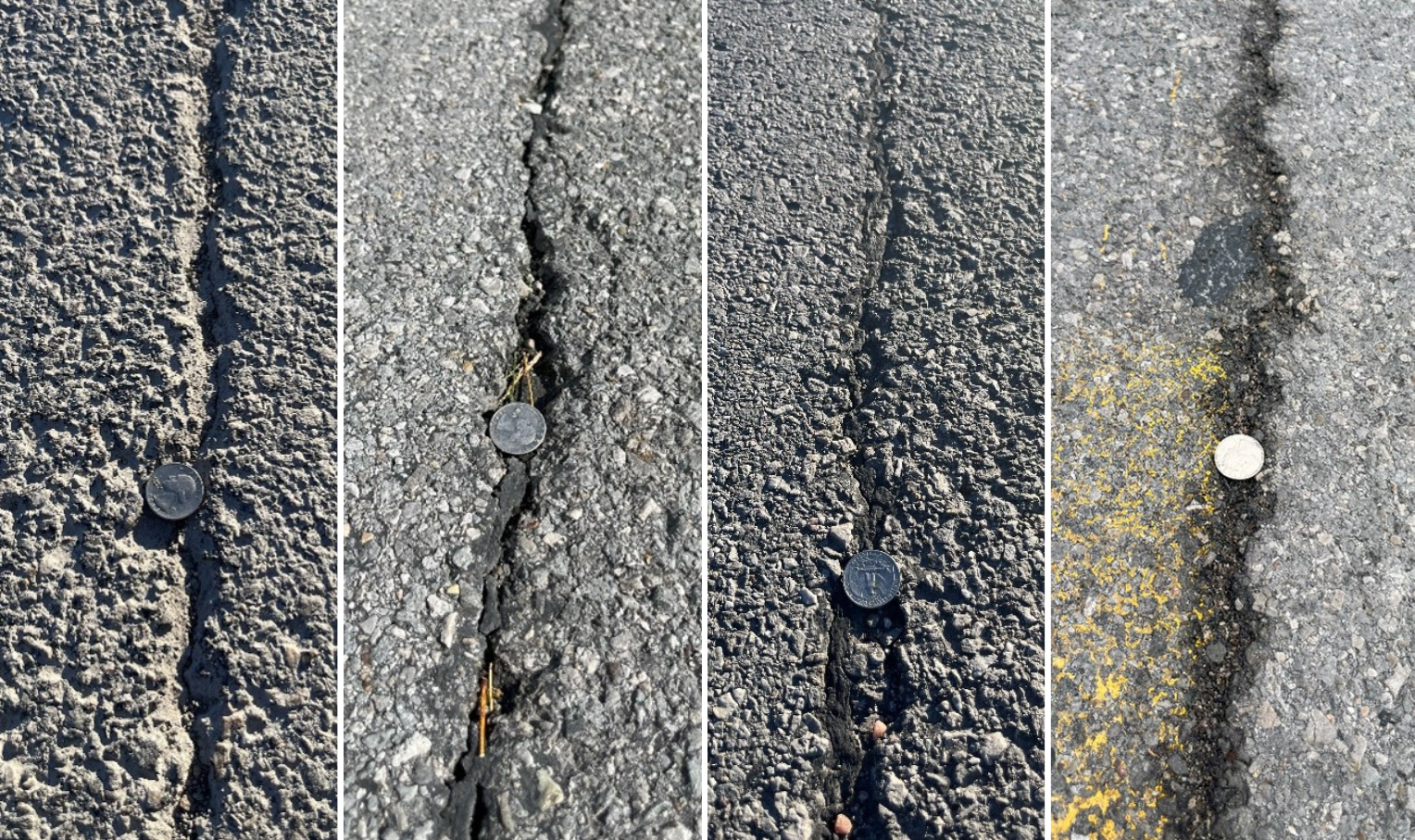
Control section centerline (No VRAM) ½” to 1” cracking throughout
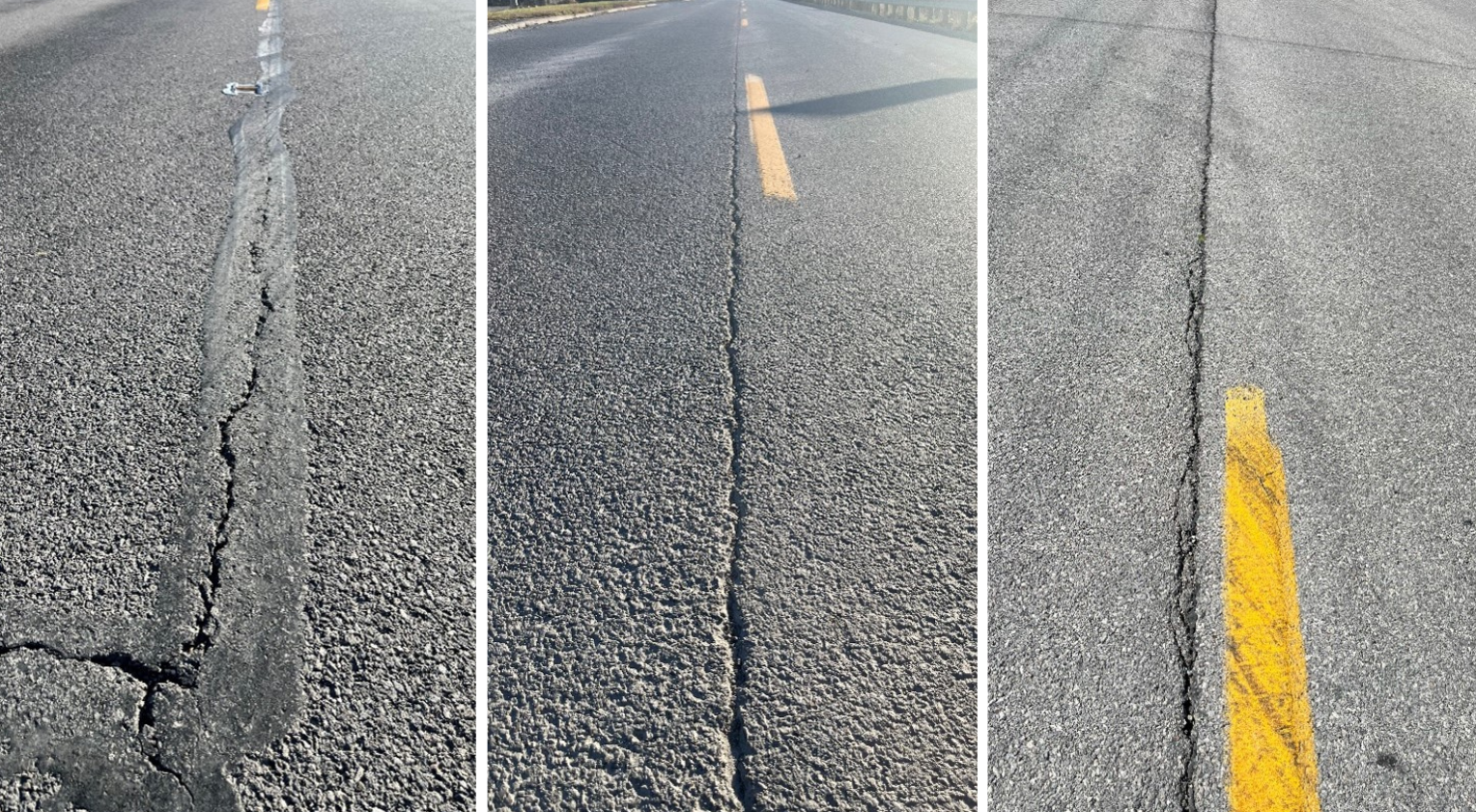
Control section cracks growing despite crack seal in 2020
VRAM Joint
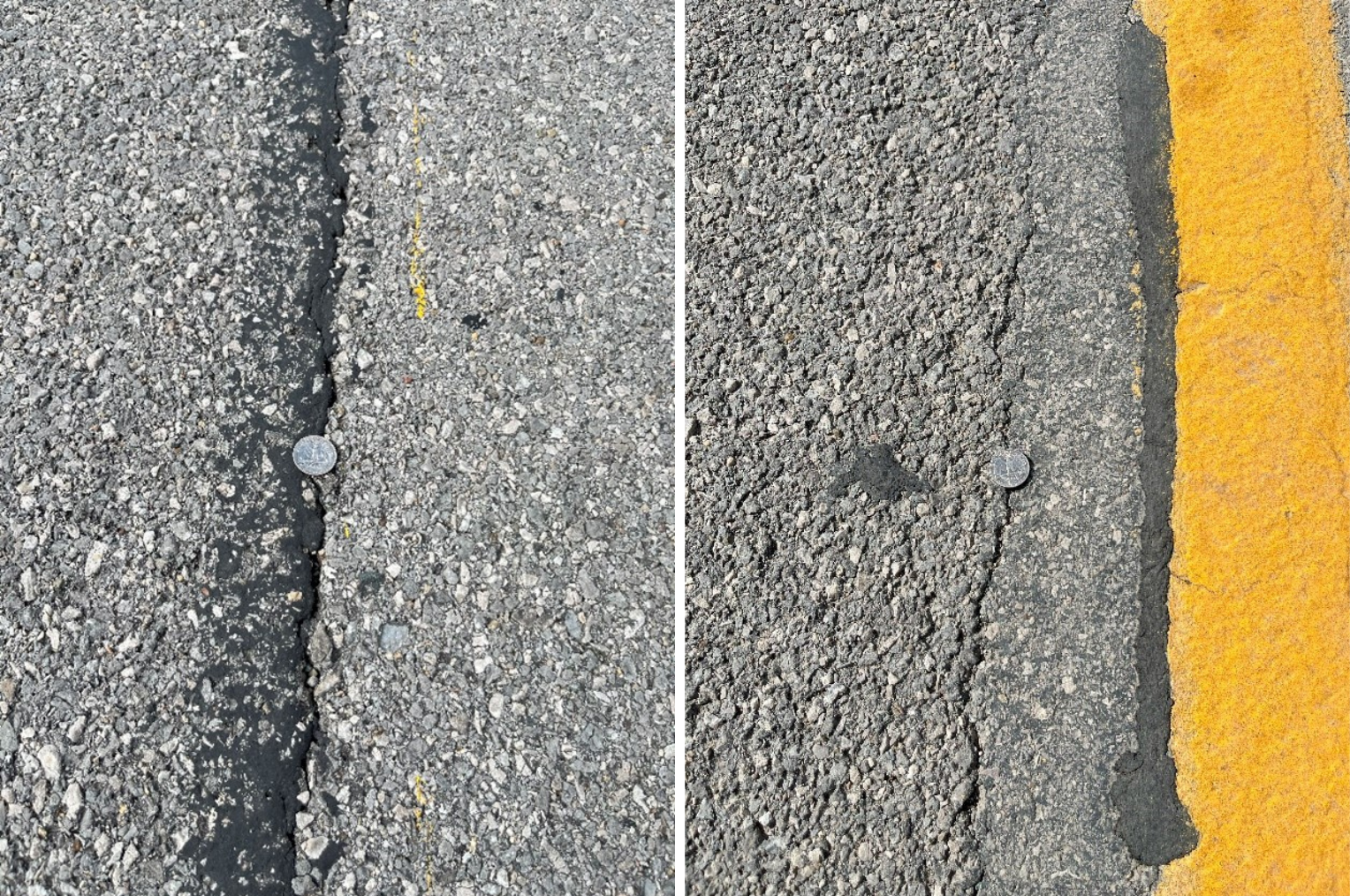
VRAM centerline with 1/8” opening
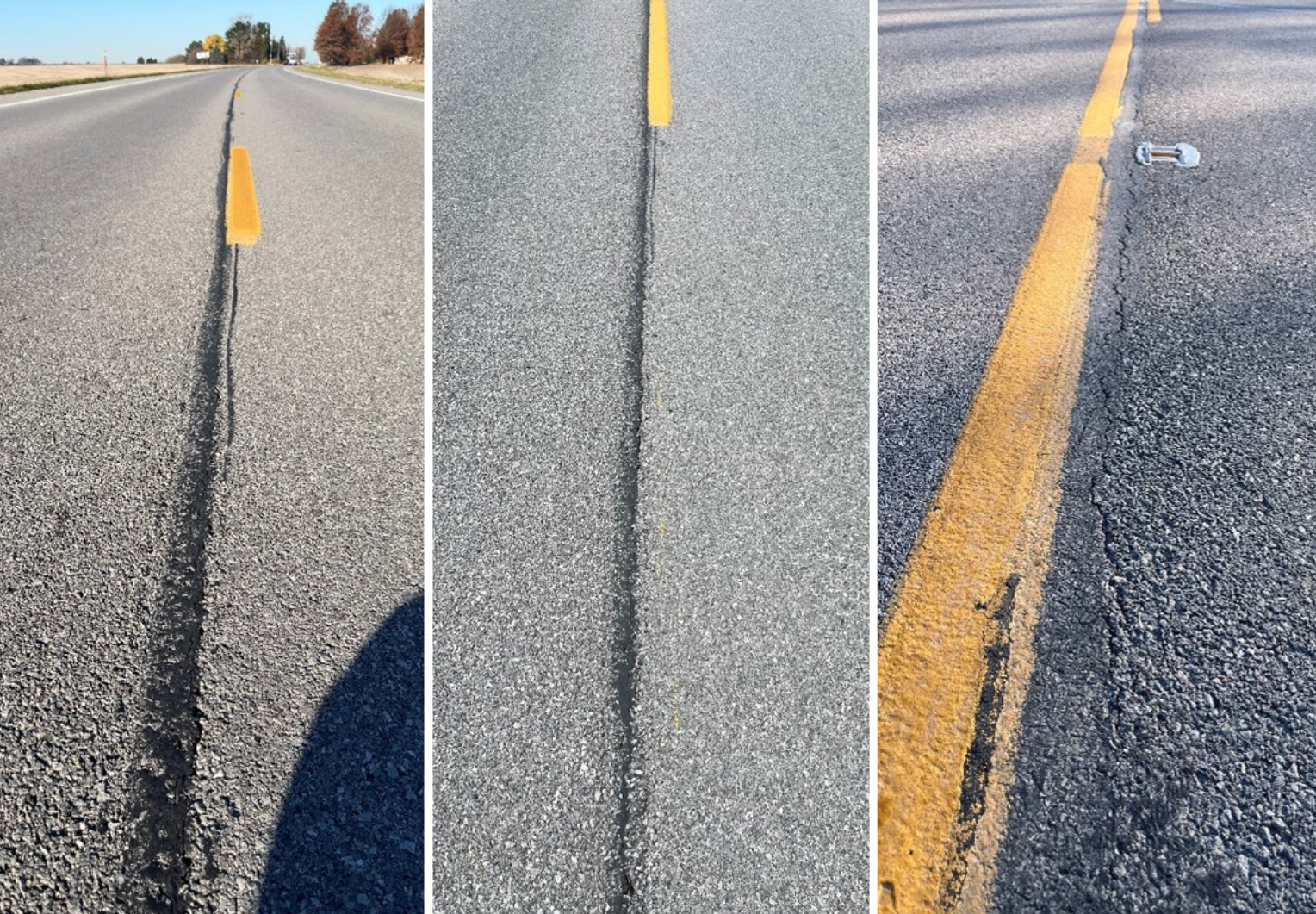
VRAM section received crack seal when the control section was sealed
The contrast between the cracked control section and the VRAM section demonstrates the ability of VRAM to seal longitudinal joints from the bottom up. Instead of worrying about maintenance and early reconstruction, ODOT can rely on the power of VRAM to extend the life of the longitudinal joint 3-5 years beyond the expected 15 years for joints.
VRAM also saves agencies at least $2 for every $1 they initially invested. The state of Illinois has even experienced a 3-5x return on investment.
To discover the difference VRAM can make for your roads, check out our ROI calculator.
Editor’s Notes: J-Band® is a registered trademark of Asphalt Materials, Inc. J-Band® was created in the labs of the Heritage Research Group (HRG) and is a product of Asphalt Materials, Inc. (AMI).